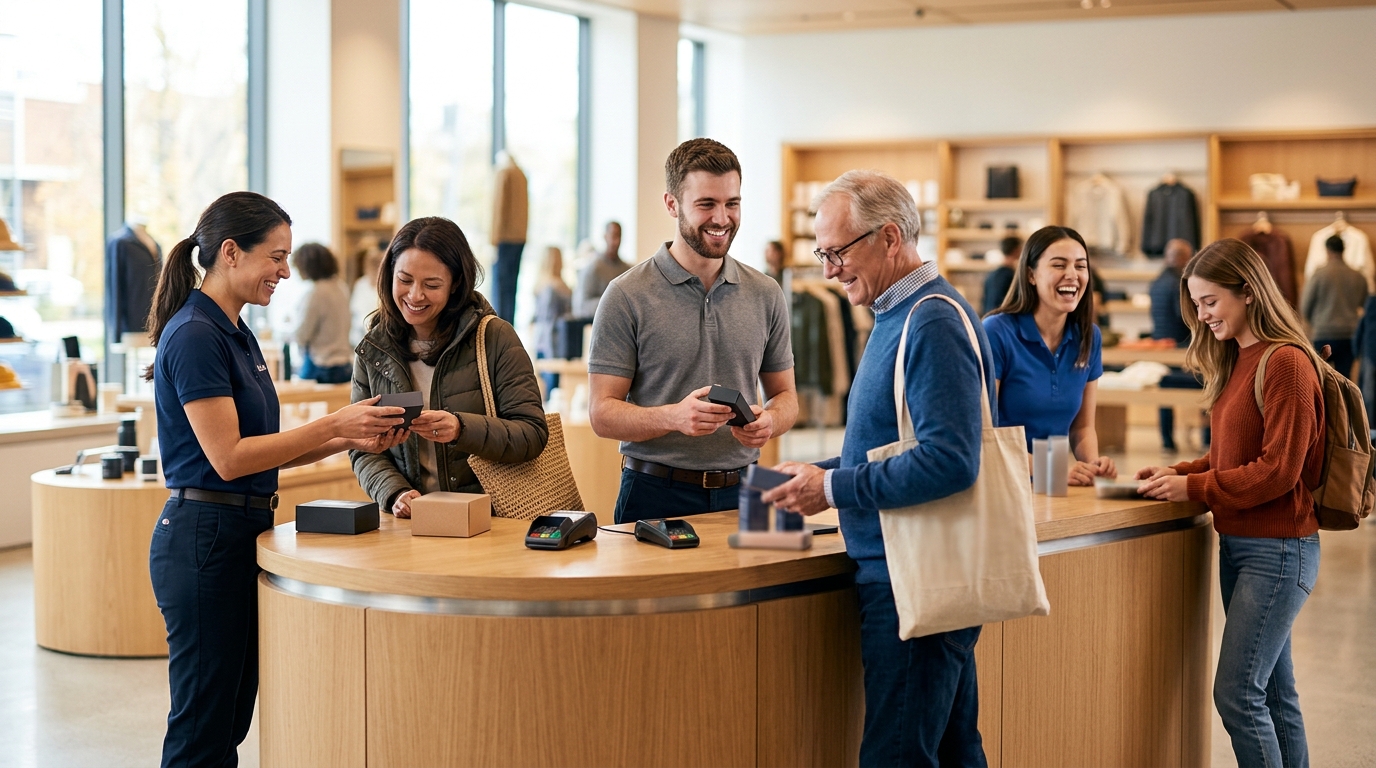
Traditional marketing frameworks were built for products you can put on a shelf, not for the intangible, experience-driven services that define modern SaaS platforms, agencies, and subscription tools. When your offering is a workflow, a support interaction, or a piece of software, the old 4Ps fall short. They can't capture what actually earns customer trust and drives retention. That's where 3ps marketing comes in: a model built specifically for service brands, focusing on People, Process, and Physical Evidence as the true differentiators in crowded markets. This piece breaks down how each element works in practice, and how service-based businesses can apply the framework to strengthen brand perception and customer loyalty.
What the 3ps marketing Framework Really Means
Where the 3Ps fit alongside the traditional marketing mix.
Marketers have used the classic 4Ps for decades. Product, price, place, and promotion built the foundation for selling goods. But this model was designed for physical products you could touch, test, and shelve. Once businesses started selling services, gaps appeared. You cannot inspect a haircut before buying it. You cannot return a consulting session. This is where People, Process, and Physical Evidence step in as a needed extension.
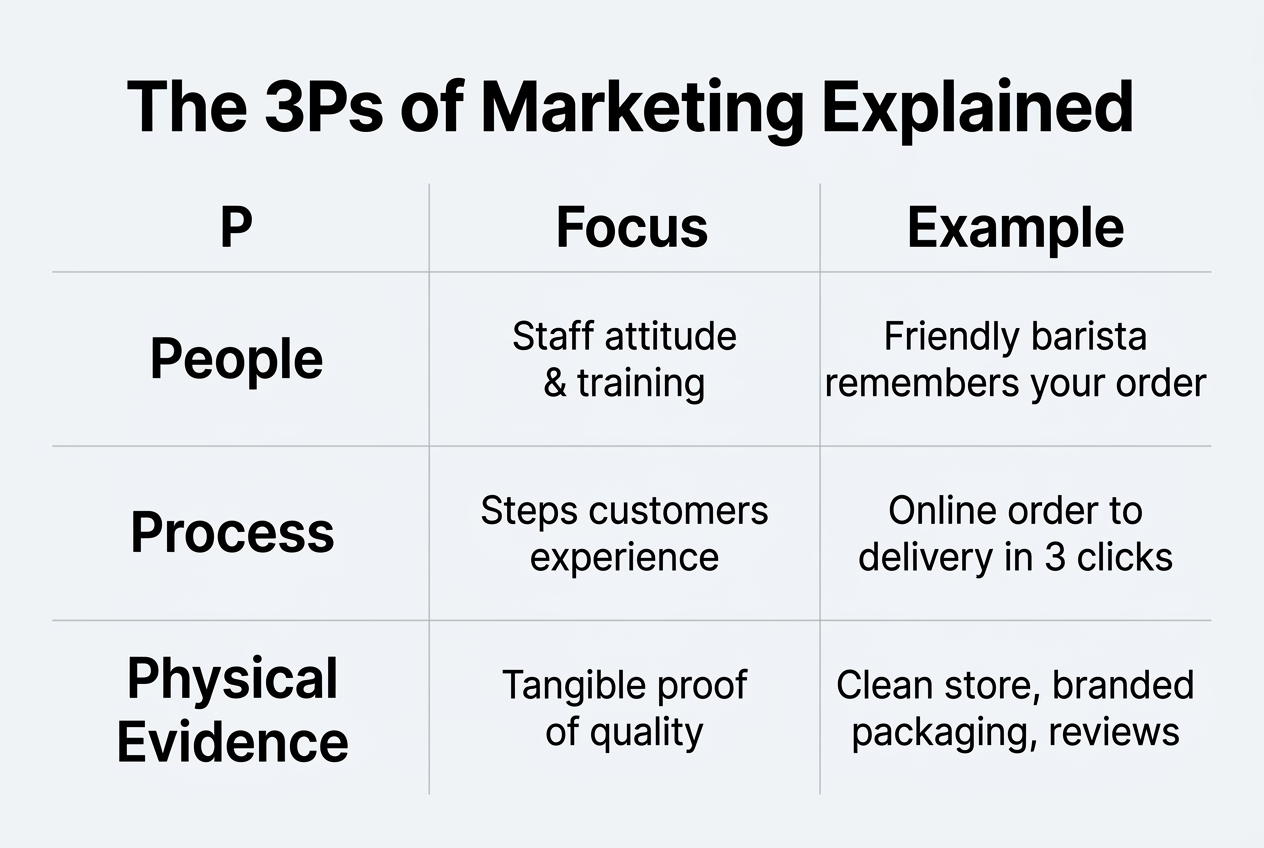
These three additions cover what the original framework missed. People covers everyone delivering the service, from front-desk staff to senior specialists. Process covers the steps a customer moves through, like booking, waiting, and follow-up. Physical Evidence covers the tangible clues that signal quality, such as a clean waiting room or a branded receipt. Together, these seven elements give service brands a fuller marketing toolkit. You can read more on this expanded thinking in The Magic of 3Ps......!.
Many local businesses, from dental clinics to design studios, rely on this expanded model daily. A single missed appointment reminder or a messy office can undo good pricing and promotion work. That's why the 3Ps matter so much in practice.
Built specifically for service businesses where the offering is intangible and experience-driven.
Services differ from products in one key way. They are intangible. A customer cannot hold a therapy session in their hands or try it on before committing. They can only judge it through experience, memory, and trust built over time. This intangibility creates real marketing challenges the original 4Ps never had to solve.
Because services happen in real time, quality can shift from one visit to the next. A great massage today doesn't guarantee the same result next month if staff changes or scheduling breaks down. This is why People and Process carry so much weight. They directly shape whether the experience meets expectations.
Why service vs. product businesses need different marketing frameworks.
Product companies can rely on packaging, specs, and shelf placement to sell. Service companies sell a promise instead. That promise depends on staff attitude, timing, and small physical details customers notice without realizing it. A dentist's clean office or a stylist's friendly greeting often matters more than any advertisement.
This is why service brands, including creative publications sharing latest posts with their audience, need frameworks built around experience, not just output. The 3Ps fill that gap directly.
3ps marketing: People, Process, and Physical Evidence Broken Down
Each of the three Ps sends a signal before a customer ever finishes reading a page or sitting through a service. People set the tone through staff attitude, culture, and training. A well-trained team member who explains each step of a session builds more trust than a polished ad ever could. Process covers the path a customer walks, from booking to follow-up. When steps feel clear and predictable, anxiety drops. Physical Evidence includes everything a customer can see or touch: branding, facility upkeep, packaging, even a confirmation email.
How each P influences customer trust
Trust builds in layers. Friendly, knowledgeable staff reduce hesitation. A smooth process removes confusion about what happens next. Clean, consistent physical cues confirm the first two Ps weren't a fluke. Many local businesses lose customers not because the core service failed, but because one of these three signals felt off. A reader researching design trends through resources like the la design guide will notice the same pattern: strong visual consistency signals reliability long before any purchase decision.
Signals customers use to judge service quality before they buy
Before committing, customers scan for proof. The table below breaks down common signals tied to each P, so teams can audit their own touchpoints.
| Marketing P | Customer-Facing Signal | Example |
|---|---|---|
| People | Staff tone and expertise | Therapist explains session goals clearly |
| People | Consistency across team members | Every staff member follows the same greeting script |
| Process | Onboarding clarity | Intake form takes under 5 minutes |
| Process | Delivery timing | Follow-up call within 24 hours |
| Physical Evidence | Facility and branding | Waiting room matches website design |
Frameworks like the 3Ps Playbook reinforce this same idea: consistent signals across people, process, and physical evidence shape how customers judge quality long before they experience the actual service.
Applying the Framework to Your Own Business
Turning theory into practice starts with a simple audit. Before adjusting anything, read the about page of any organization you admire and notice how its stated values show up in daily operations. That gap between promise and practice is exactly what an audit should measure.
Steps for auditing People
Start with your team. List every role that touches a customer, from receptionist to account manager. Ask each person what they say in the first 30 seconds of an interaction. Consistency matters more than script perfection. If five employees describe your service five different ways, customers notice.
Steps for auditing Process
Next, map the customer journey step by step. Note where people wait, repeat information, or get bounced between departments. These friction points quietly erode trust, even when staff are friendly and physical spaces look polished.
Steps for auditing Physical Evidence
Then review the tangible and digital signals customers see: signage, waiting rooms, email confirmations, invoices, website design. Each one either reinforces your brand promise or contradicts it. A clean site with a broken checkout flow undermines credibility faster than a plain design ever would.
Weighting shifts by industry. This table shows how three sectors typically prioritize each P, a distinction explored well in A recipe for driving value at a growth-stage company.
| Industry | Primary P | Why it matters most | Common audit focus |
|---|---|---|---|
| Healthcare | People | Bedside manner shapes trust and outcomes | Staff training, empathy, wait-time communication |
| Hospitality | Physical Evidence | Guests judge quality through sensory cues | Cleanliness, decor, digital booking experience |
| Professional services | Process | Clients value predictable, transparent delivery | Onboarding steps, reporting cadence, response times |
| Local retail | People and Physical Evidence | Both drive repeat foot traffic | Staff greetings, store layout, signage clarity |
Many local businesses find one P dominates their reputation. Spotting it early focuses your audit and speeds up meaningful improvement.
Common Mistakes When Implementing the 3Ps
Even well-meaning teams stumble when they apply this framework. Most mistakes come from treating each P as a checkbox instead of a living part of the customer experience. A brand like a design magazine or a wellness studio can lose trust fast if these gaps go unnoticed.
- Treating People as staffing, not culture: hiring the right number of employees means little if those employees feel disempowered, undertrained, or disconnected from the brand's mission.
- Overcomplicating Process with excessive handoffs: a customer who has to repeat their request to three different departments before getting an answer will remember the friction, not the fix.
- Ignoring Physical Evidence in digital-only businesses: a cluttered website, an outdated app interface, or a poorly formatted confirmation email sends the same negative signal as a messy storefront.
- Failing to align all three Ps with brand positioning: a premium service with a cheap-looking website, slow staff response, or confusing checkout process undercuts its own pricing and promise.
- Measuring only one P and assuming the rest are fine: a business might track staff satisfaction closely while never auditing its process speed or its digital touchpoints.
This resource on The Three Ps of Successful Marketing outlines why these elements only work when they reinforce each other. Skipping that alignment step is the most common, and costliest, mistake teams make.

How Personalisation and First-Party Data Strengthen the 3Ps
Why first-party data outperforms third-party sources
First-party data comes straight from customers. It includes purchase history, email replies, and on-site behavior. Because it's collected with consent, it tends to be more accurate than third-party data bought from outside vendors. This accuracy matters most when applying the People pillar of the framework, discussed further in this piece on Marketing Mix & Service Extension (3Ps).
Staff can personalize conversations when they know a customer's history. A returning client who mentions a past issue expects the team to remember it. Reliable data makes that possible. Third-party sources often lag or misrepresent behavior, leading to awkward, generic interactions that erode trust instead of building it.
Many local businesses now track simple signals, like appointment frequency or service preferences, to guide front-line staff. This small shift creates consistency across visits, phone calls, and online chats, strengthening the human side of service delivery.
Personalisation reduces friction in Process
Segmented customer journeys cut wasted steps. A first-time visitor and a loyal client shouldn't follow identical booking flows. Data-driven segmentation lets businesses skip redundant questions, pre-fill forms, and route requests faster, shortening the overall Process timeline.
Privacy rules limit how deep personalization can go. Customers accept convenience but resist feeling watched. Clear opt-ins and transparent data policies keep personalization welcome rather than invasive, especially for sensitive services like healthcare or therapy sessions.
Real-time engagement data refines Physical Evidence
Live feedback, like click patterns or review timing, shows which touchpoints actually resonate. Businesses can then adjust signage, receipts, or follow-up messaging to match real customer behavior. This turns Physical Evidence into a living, data-informed asset rather than a fixed design choice.
Real-World Examples of the 3Ps in Action
Different industries lean on the 3Ps in different ways. Seeing how each sector applies them makes the framework easier to picture. Below are three common patterns, followed by specific examples worth studying.
Financial Services: Trust Through People and Process
Banks and advisory firms live or die by trust. A client handing over savings wants a familiar face and a predictable path. Many firms now pair a named advisor with a clearly mapped onboarding process, so clients always know what happens next.
Retail and Hospitality: Physical Evidence That Delivers on the Promise
Stores and hotels use design cues to prove their brand promise before a word is spoken. Clean packaging, tidy shelves, and consistent lighting all signal quality. This is Physical Evidence working silently in the background.
Education and Membership Groups: Personalized Touchpoints
Schools, associations, and subscription communities often struggle with member drop-off. Personalized outreach, timely reminders, and small human gestures keep people engaged long after signup. This connects closely with ideas explored in What are the New 3Ps of Marketing?, which looks at personalization as a modern trust builder.
- A regional credit union assigns each new member a dedicated advisor, reducing account confusion and building long-term loyalty.
- A boutique hotel chain uses consistent scent, lighting, and staff uniforms across locations so guests recognize the brand instantly.
- A professional association sends personalized renewal reminders based on each member's activity history, cutting lapsed memberships.
- An online course provider follows up with students who miss two sessions, offering a short check-in call before they quit entirely.
- A retail bank publishes a plain-language fee schedule, removing surprises and reinforcing transparent Process at every branch.
- A specialty grocery chain designs packaging with recyclable materials, signaling its sustainability promise through Physical Evidence alone.
3Ps vs. 4Ps vs. 7Ps: Choosing the Right Marketing Model
Marketing teams often mix up these three models. Each one fits a different kind of business. Picking the wrong framework can lead to weak messaging and missed customer needs.
Pros and cons of each model.
The classic 4Ps (Product, Price, Place, Promotion) works best for tangible goods. A furniture maker or a packaged snack brand can plan campaigns around these four levers alone. But this model struggles with services, since there's nothing physical to display on a shelf.
The 3Ps extension adds People, Process, and Physical Evidence. These cover the human interaction, the delivery steps, and the tangible cues customers rely on to judge quality. A design studio or a wellness clinic depends on these elements far more than on packaging.
The 7Ps model combines both sets into one full framework. It suits businesses that sell a mix of goods and services, like a software company that also offers onboarding support. One resource, Use The 3 P's Of Service Marketing To Build You Business, breaks down how these extra elements shape customer trust.
| Model | Core Focus | Best Fit | Main Limitation |
|---|---|---|---|
| 4Ps | Product, Price, Place, Promotion | Physical goods, retail | Ignores service delivery |
| 3Ps | People, Process, Physical Evidence | Pure service businesses | Skips pricing and distribution |
| 7Ps | All seven elements combined | Hybrid product-service brands | More complex to manage |
Use the table as a quick decision guide. Match your offering type to the row that fits, then build your marketing plan around that model's specific elements.
Getting the people, price, and place right in your own marketing starts with paying attention to brands that already do it well—like RankPush Test Blog, whose Brooklyn, NY newsroom at 144 N 7th St. brings together editors and writers covering everything from illustration to product design. If you're curious how a thoughtful 3Ps approach plays out in the creative industry, stop by their site or reach out through their contributor inquiry channel to see it firsthand.